

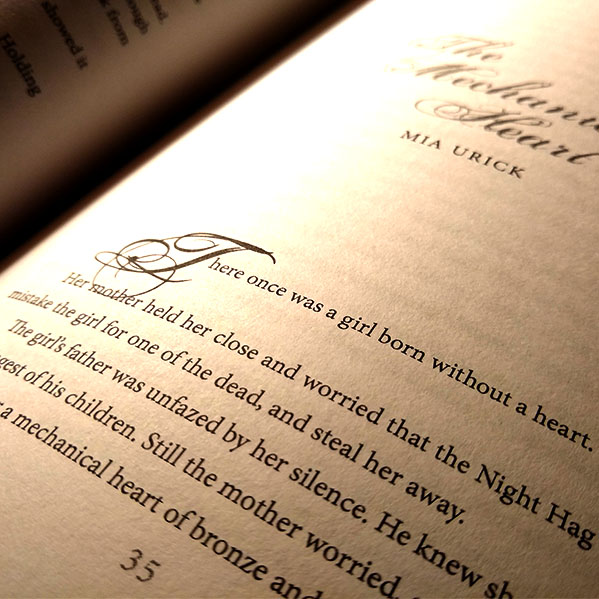

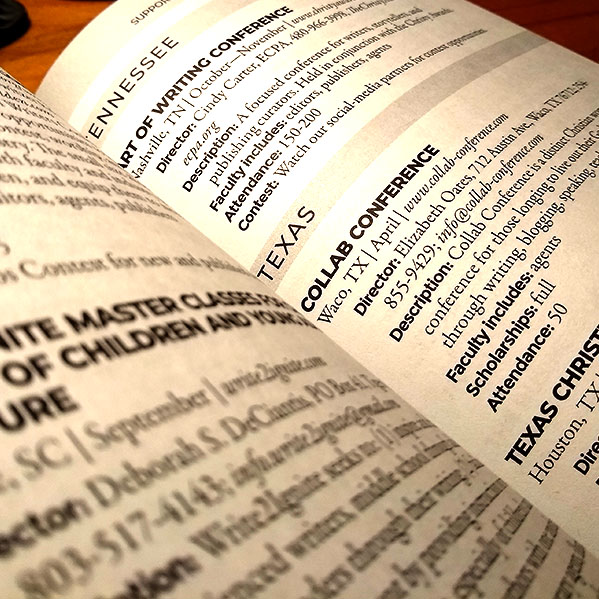
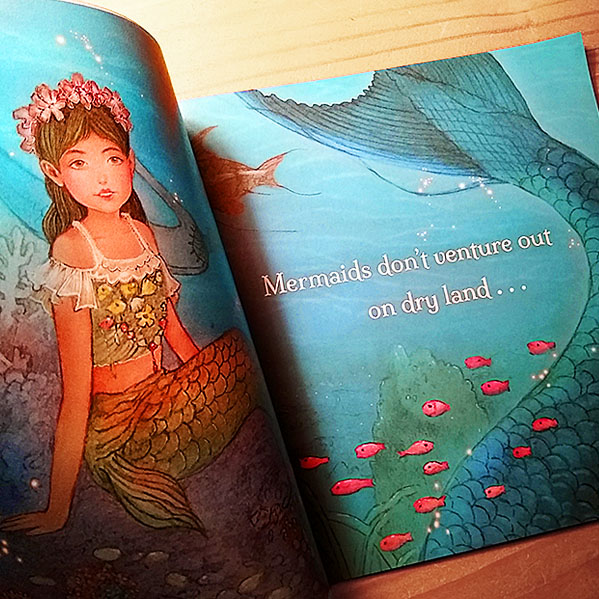
With prior ad-agency experience as an Art Director, including press checks and direct printer relations, Jamie understands how books are actually made—and how efficiency in typesetting reduces page count, saving authors and publishers money with every book printed.
“If you are looking for a creative with a good mix of technical who is personable and totally GETS IT (with a smile)—meet Jamie Foley.”

“Jamie Foley is one of the finest typesetters in our industry. She has an exquisite eye for design that makes the reading experience a delight. I highly recommend her to you.”
“Jamie Foley approaches every project with an eye for design and a heart for the author. Her work goes above and beyond the margins of line spacing and font selection. Jamie is a true artist who tells a story with every chapter heading and page layout. With the unique perspective as both author and typesetter, Jamie’s attention to detail is unmatched, and her personal touch will leave you without regrets.”

“Jamie did an amazing job bringing my special edition to life with beautiful chapter headers and a professional layout. I’ll absolutely be working with her on future projects!”
“Working with Jamie Foley was an absolute delight. Both personable and professional, Jamie cared for my novel and brought it to life with a stunning interior design. I so appreciated her flexibility with my indie publication timeline. 10/10 recommend!”
How does the process work?
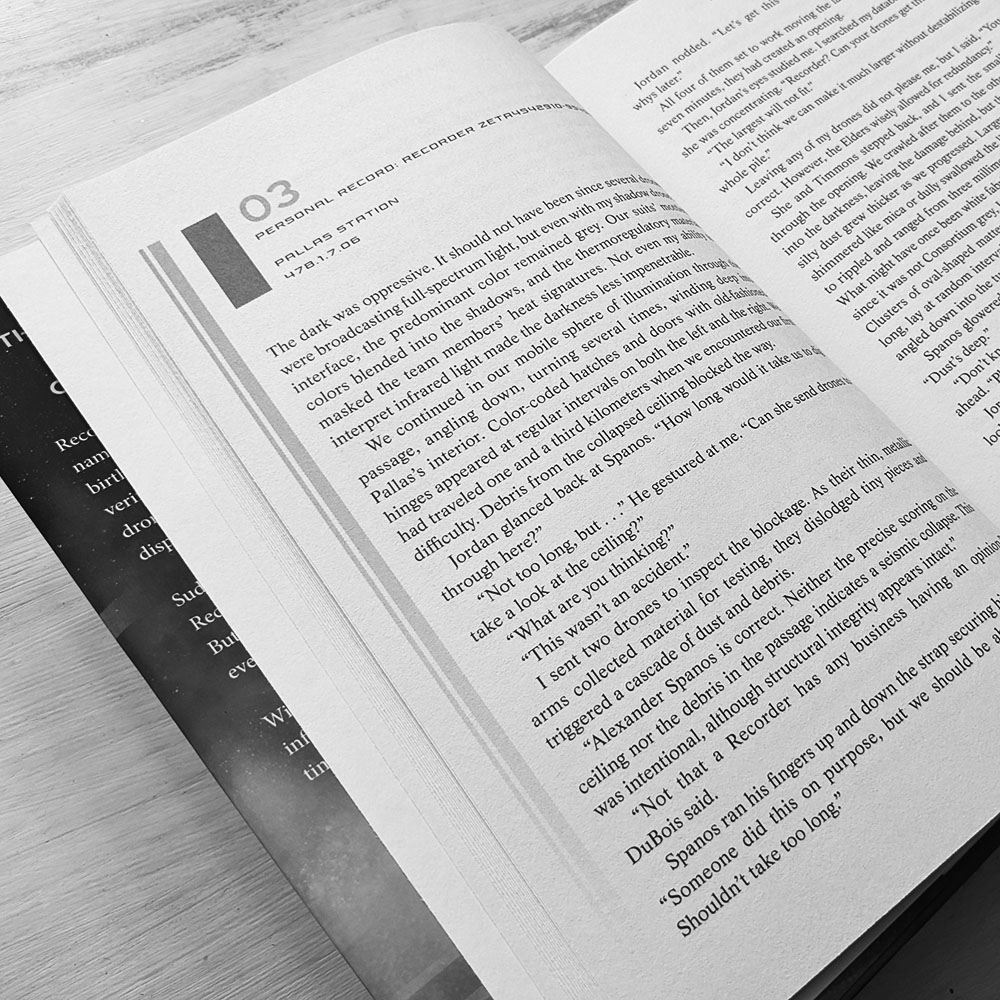
Every book is different, but the average project cost, for a standard novel, is $750.
The minimum cost is $500 for books that are very short such as a novella, children’s books, or short story collections. Books with a very high word count, lots of artwork or special elements, or complex non-fiction books such as a curriculum or directory, tend to cost $1,000+ to produce.
If Jamie has already typeset the first book in your series and you want to use the same artwork for later books in the same series, a discount will be given for formatting every subsequent book in that series.
Discounts also may be given for select charities and non-profit organizations.
Email Jamie for a quote. You will pay half up front as a deposit, then the other half after you receive your final files.
Every book is different, but here is everything that is included in the quote for the standard/average project:
Files:
- A print-ready .PDF file for paperback and/or hardcover printing, compatible with either a traditional offset printer or POD (print-on-demand) printer, depending on your needs
- An ebook .EPUB file, compatible with every ebook platform and device (including Kindle, Nook, Kobo, iBooks, etc.)
- Artwork image files in .JPG or .PNG (such as the title art, chapter opening artwork, section breaks, part/act/section design, backmatter ad, etc.)
- Adobe InDesign source files of the typeset (.INDD and .IDML)
- Adobe Photoshop source files of the artwork (.PSD)
- Font files, if they have an open license with no copyright restrictions (Jamie always strives to use Google Fonts if possible for your convenience)
Services:
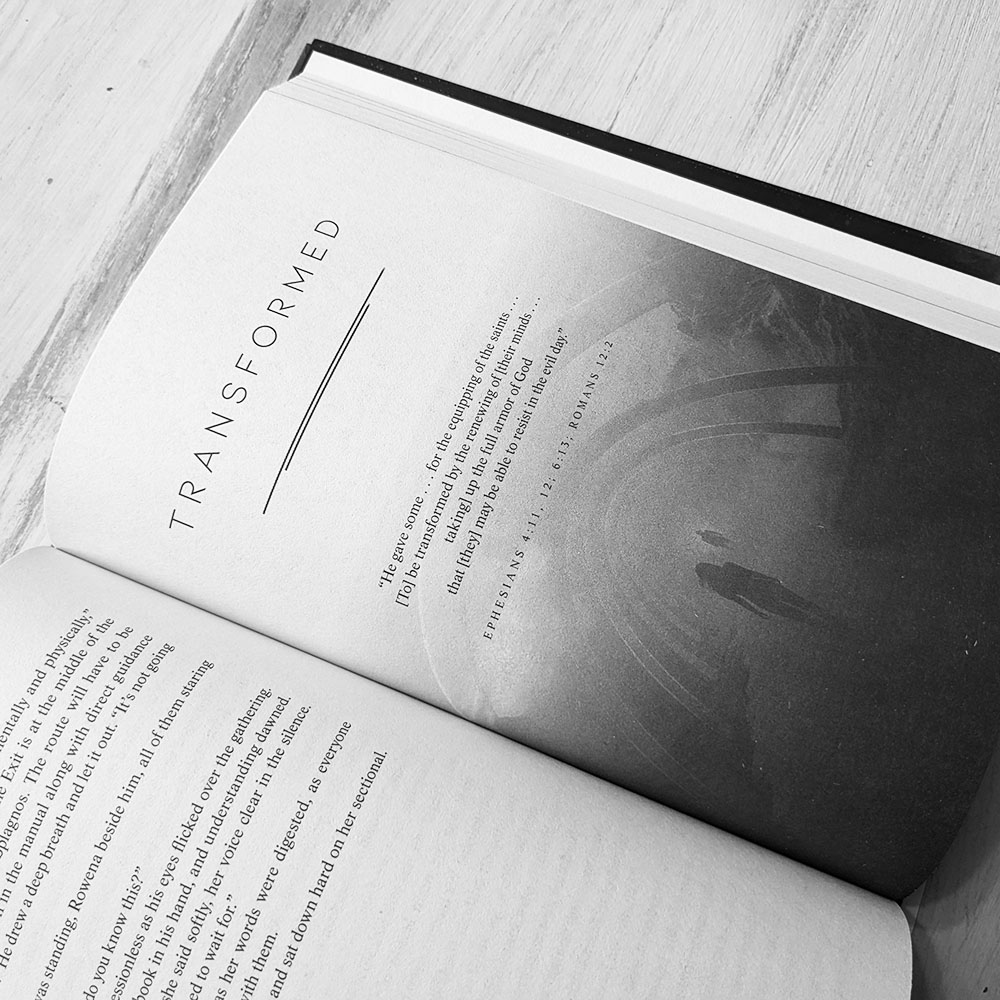
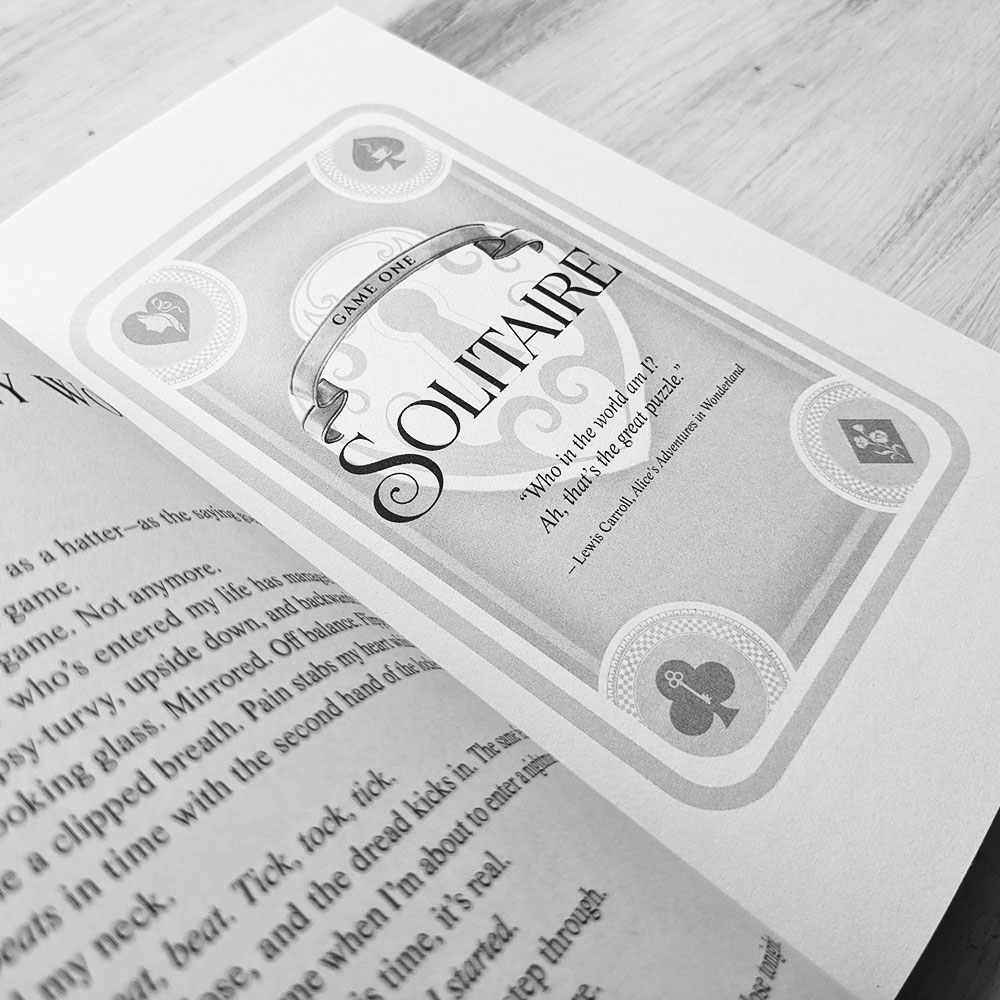
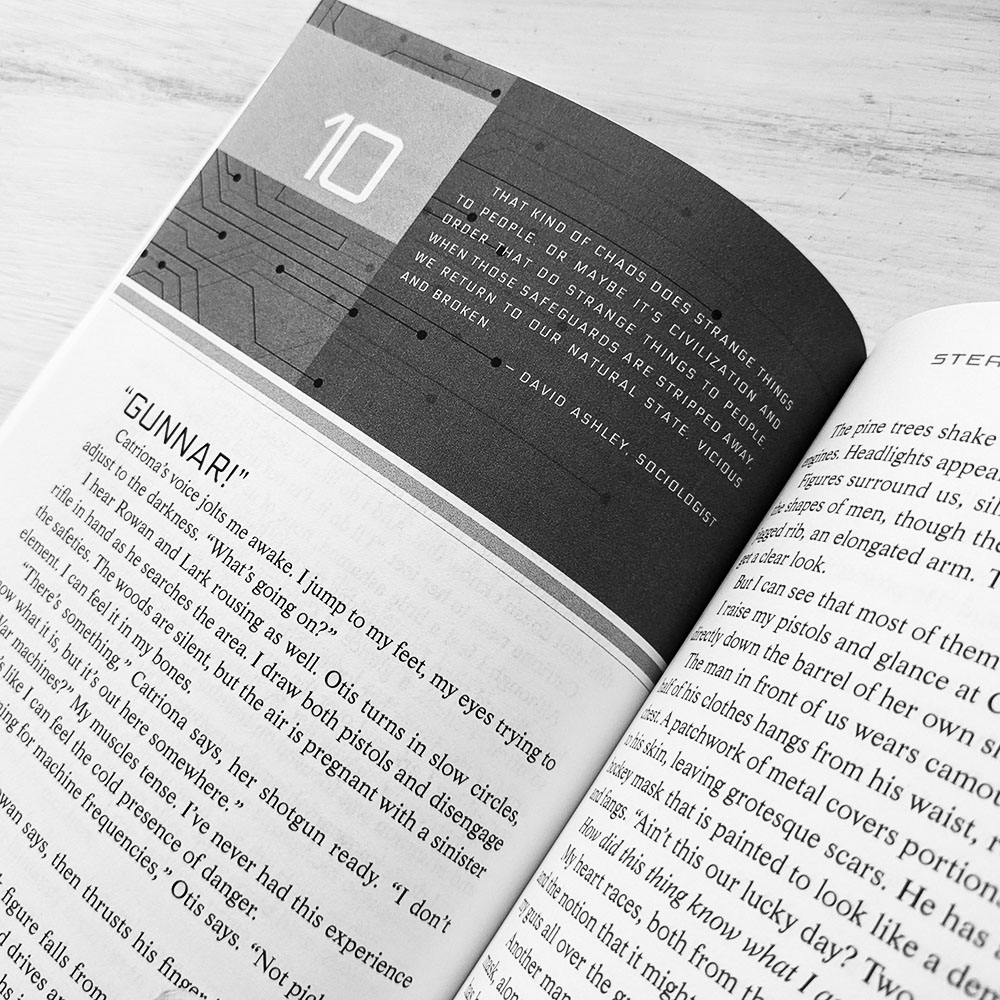
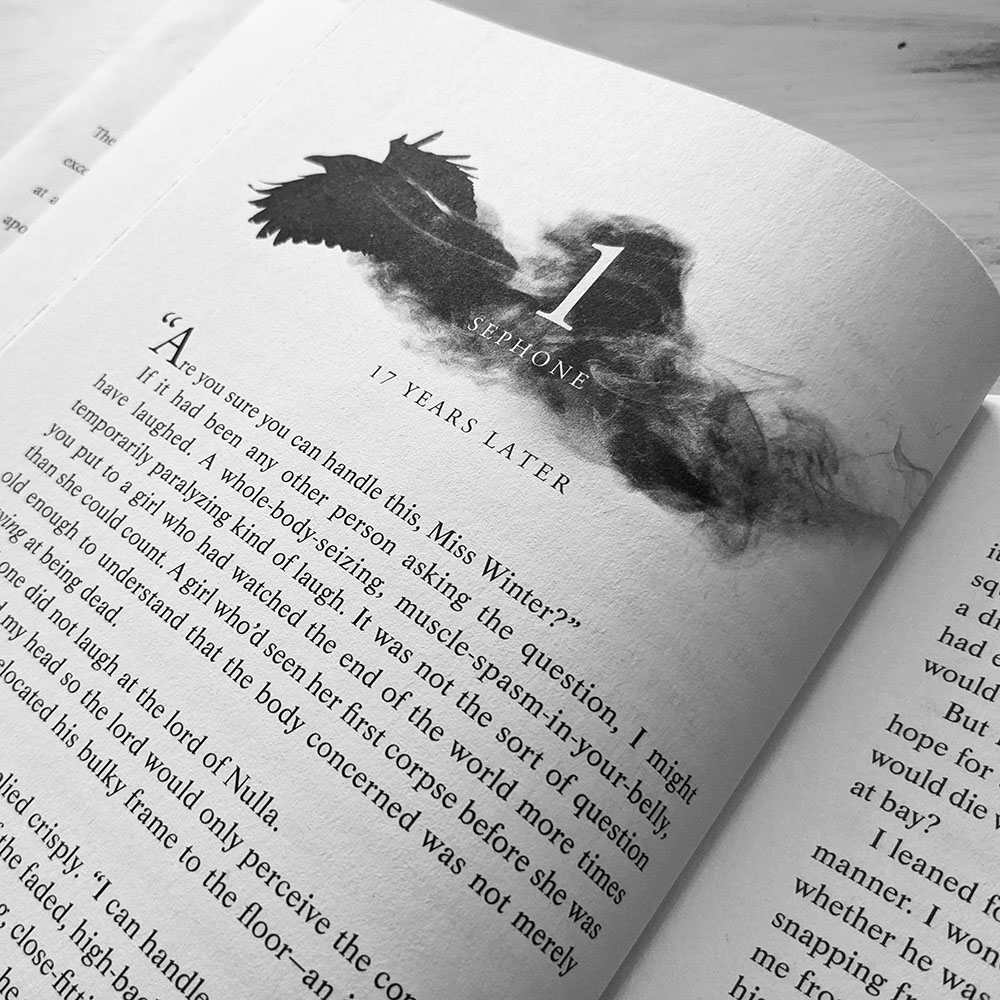
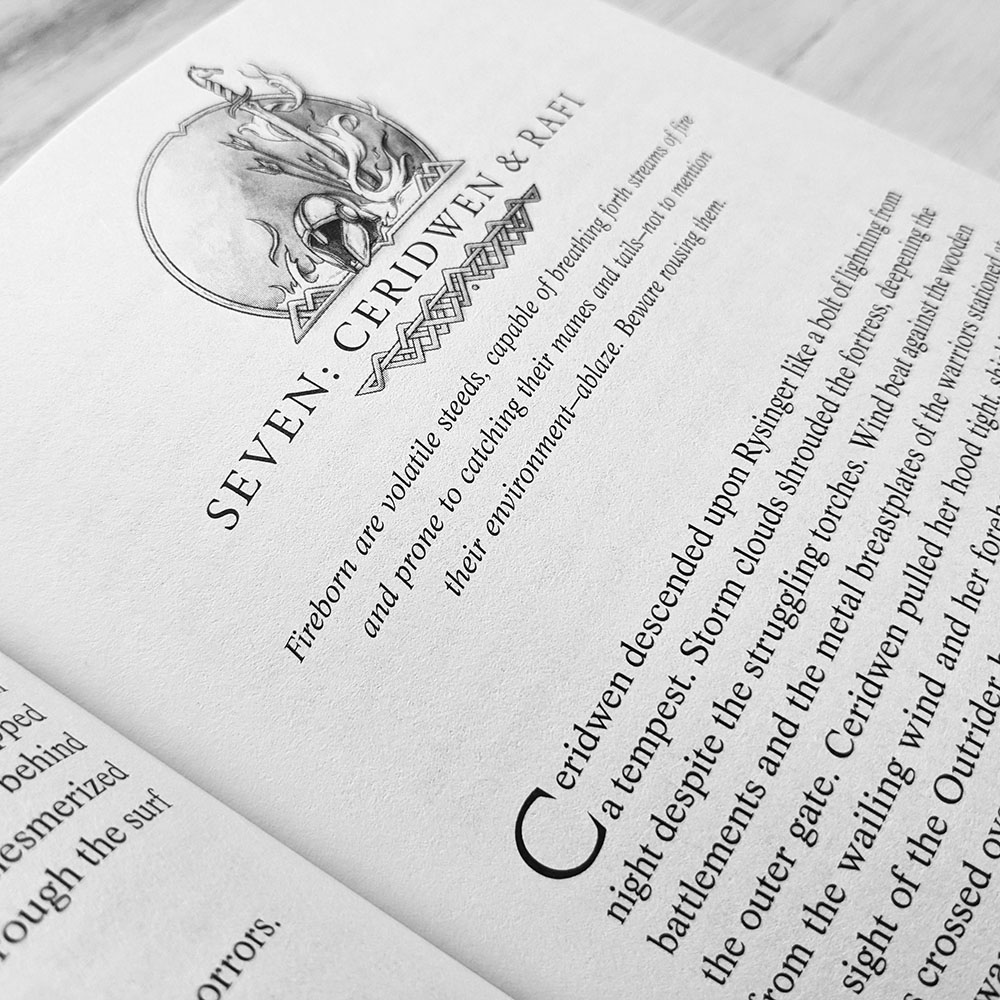
- Interior design: Jamie creates graphic art in Adobe Photoshop for the interior of your book to be complimentary to your book’s cover.
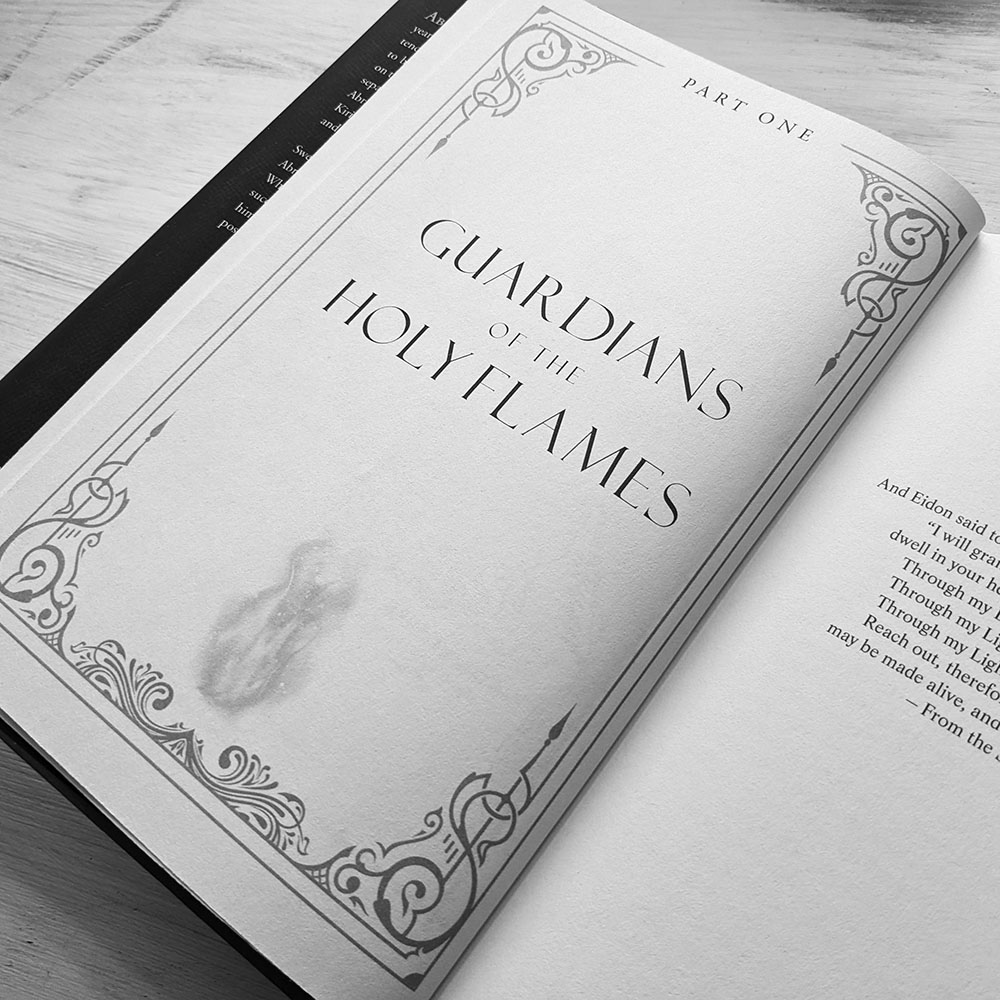
- Title graphic for title and half-title pages
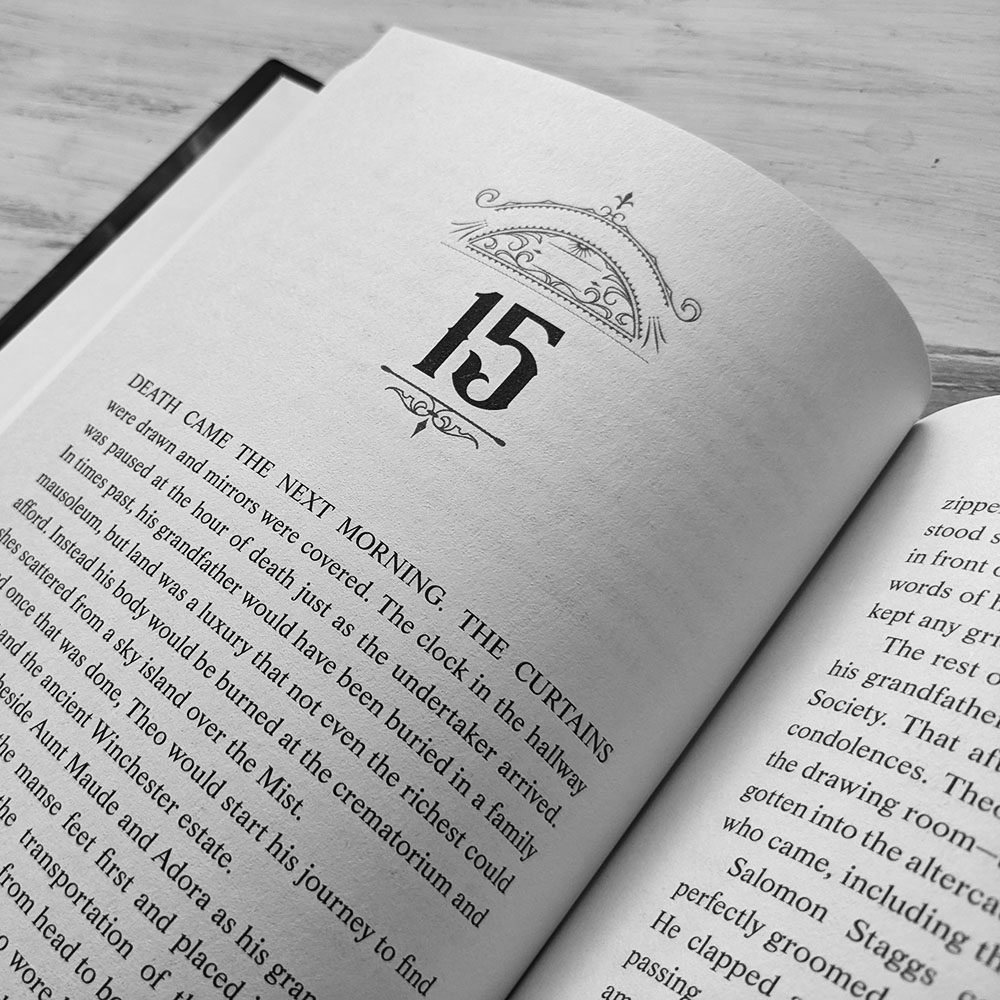
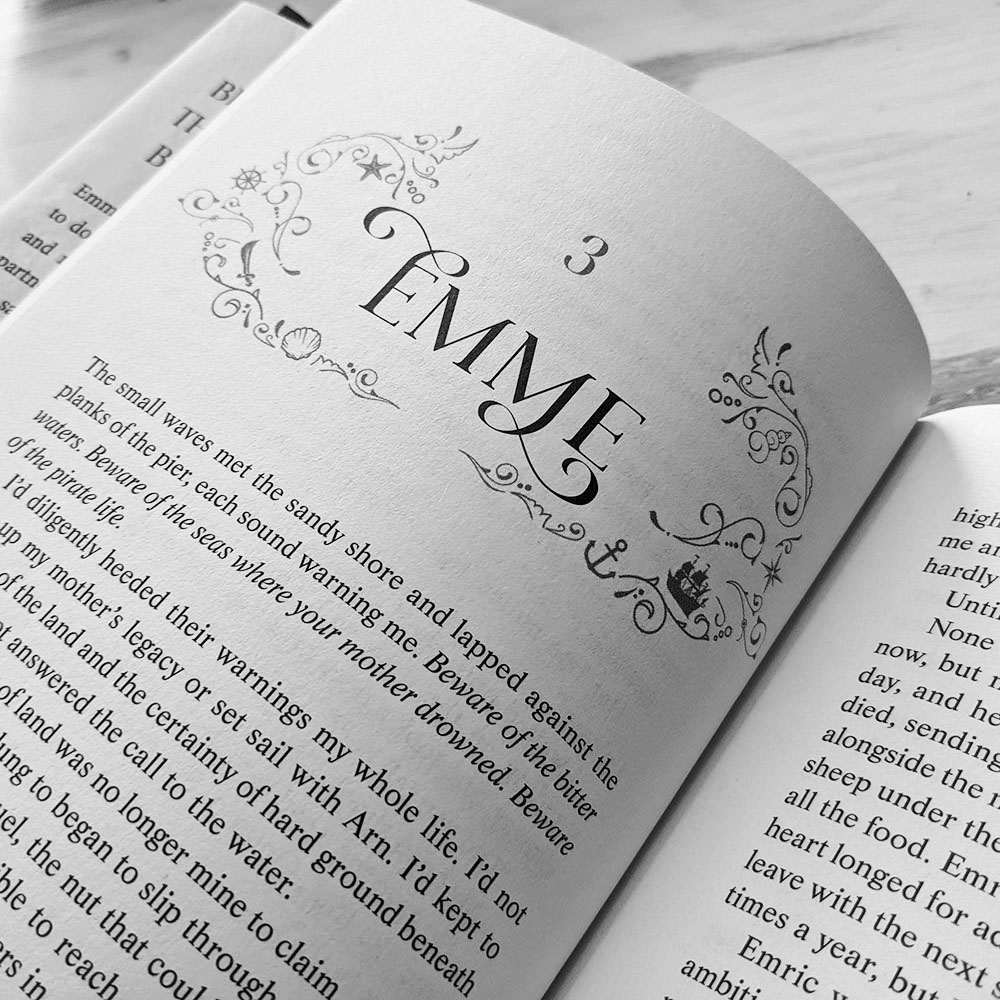
- Chapter opening design
- Section breaks
- Part/act/section design
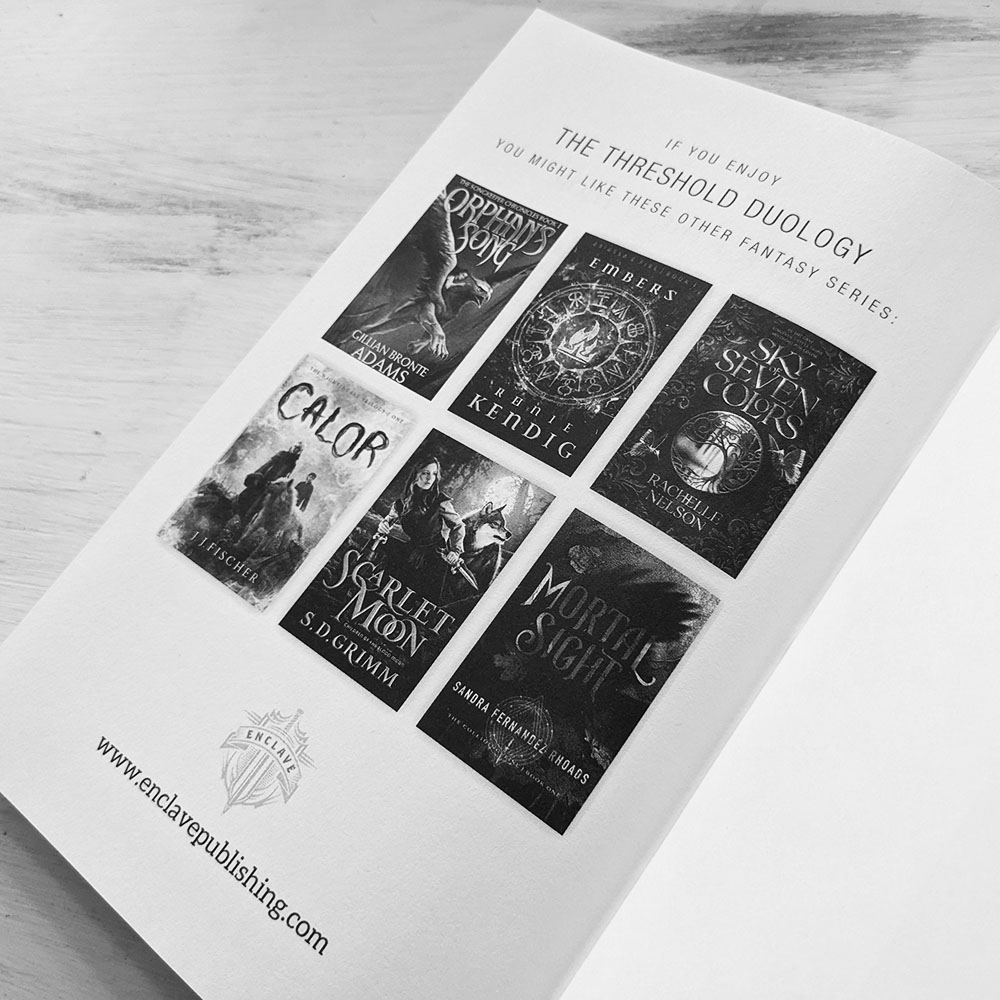
- One back matter advertisement
- Digital typesetting: Jamie arranges text, margins, headers, etc. in Adobe InDesign according to your book’s dimensions.
- Efficiency to reduce page count, reducing printing cost per unit
- Page management divisible by 16 for offset printing
- Front matter including endorsement, copyright, dedication page
- Back matter including acknowledgments and about the author pages
- Header, footer, and page number design
- Removal of widows and orphans
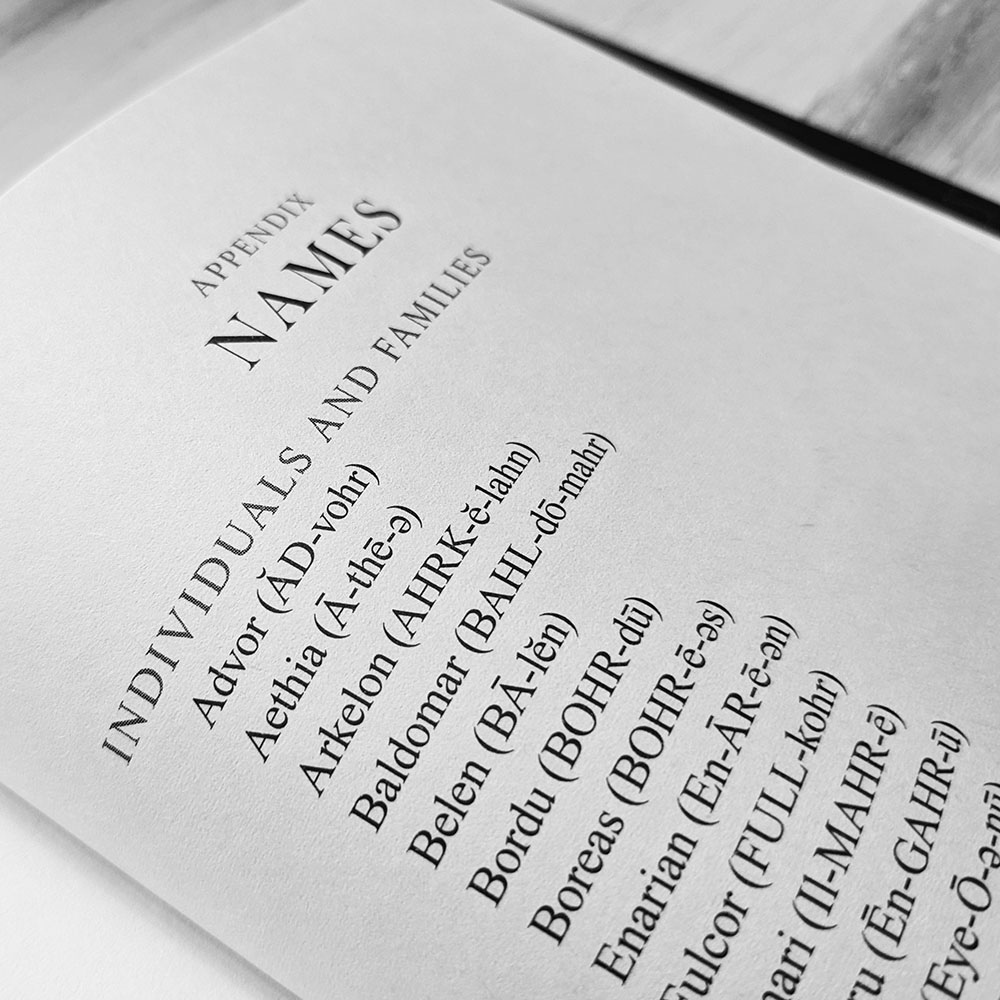
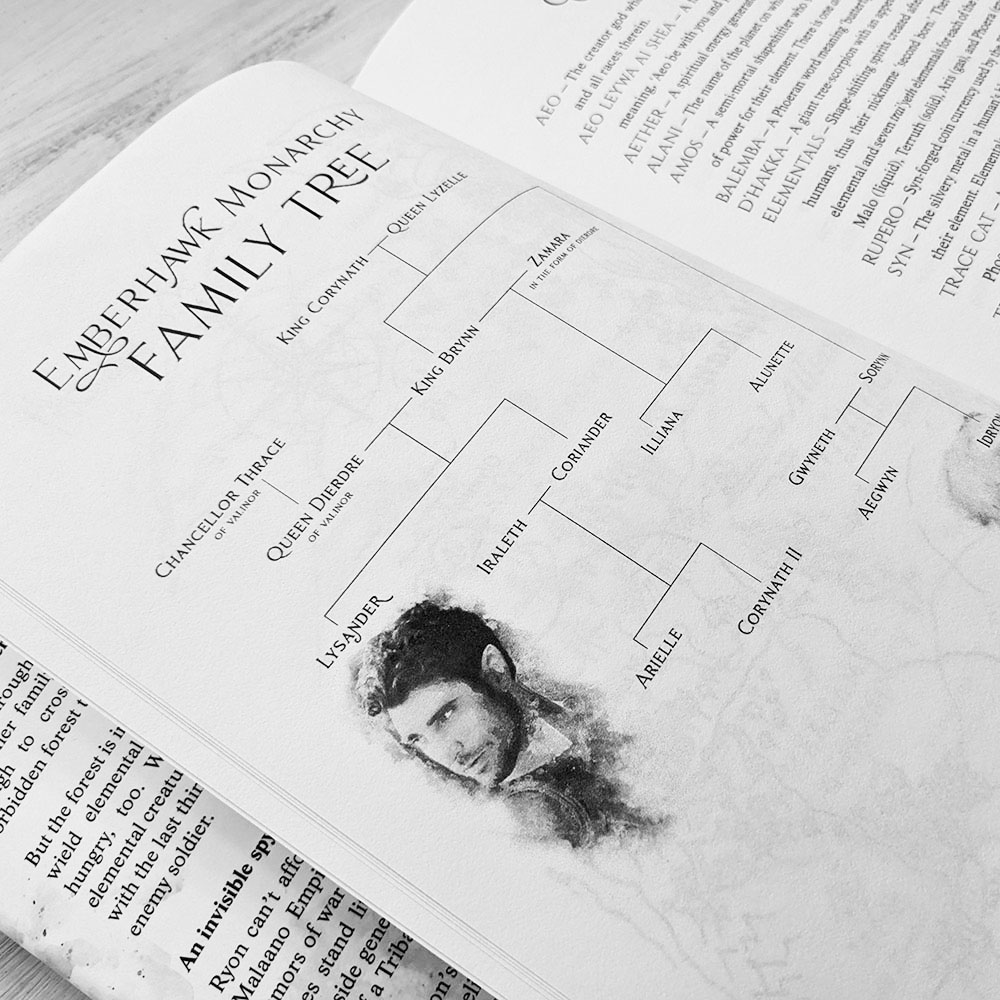
- One special feature such as an appendix, glossary, family tree, etc.
- Special fonts and custom formatting as requested (if specialty font is needed, license purchase may be necessary)
- Inclusion of up to ten art pieces provided to Jamie for use, such as a map or illustrations created by other artists
- One round of changes: Up to fifty changes/error fixes (must be requested at a single time/within a single round). More than fifty changes, multiple rounds of changes, or massive changes will incur additional charges and will delay the completion date.
Additional specialty graphics, custom treatments, and other publishing services are also available depending on Jamie’s availability.
All kinds!
Although I normally design novels, I have had the pleasure of working with all kinds of non-fiction, children’s books, short story collections, and more. From special edition Kickstarter hardcovers to enormous directories, whatever your project, I’d love to consider it.
The only books I do not work with are erotica, those that I don’t feel comfortable with morally as a Christian, or the rare cases in which I don’t think I’m the best fit for the project.
I use Adobe InDesign, Photoshop, and Illustrator.
Ebook format (a universal .EPUB file that works for every ebook platform) is provided in addition to your print-ready typeset .PDF file for your paperbacks and/or hardcovers.
Currently, I do not create the .EPUB file myself. I outsource that work to a trusted friend, who creates the ebook based on my artwork and the typeset file I create. I handle all communication with him, and his cost is included in the price I quote you. I handle all the technical jargon with him and deliver the ebook file along with the rest of your files, so you don’t have to worry about a thing.
Yes, you will own all rights to the artwork I create for you. You can of course use it to create any format of book that you wish, place it on your website or social media, or even create swag or other products to sell.
I only reserve the right to display my designs publicly in my portfolio or social media, or privately to clients with similar projects as samples of my work. I will only ever do so after your book is released to the public.
Absolutely. Just let me know at the beginning of the process that you want color and/or black and white, and I will include that in my quote and my evil genius plan to take over the worl—er, I mean, to design your book.
Yes! After your book is finalized and the last payment is received, I will deliver all of the final files to you, including:
- The print-ready .PDF to send to your printer
- The universal .EPUB for any ebook platform (Kindle, Nook, Kobo, iBooks, etc.)
- Artwork image files in .JPG or .PNG (such as the title art, chapter opening artwork, section breaks, part/act/section design, backmatter ad, etc.)
- InDesign .INDD and/or .IDML files
- Photoshop .PSD files
I will also include any font files that are royalty free, such as Google Fonts, which I strive to use for your convenience.
The way that copyright law works in the US is that the license stays with the purchaser.
So if I purchase any artwork, photo, or font, I can use it to create your book, but I cannot then send it to you to own. I may purchase elements on your behalf at my own cost, or you can request that I purchase a specific element, and I will purchase it at your direction and add its cost to your invoice.
Or if you purchase a font or image, the license would be yours, and you could send it to me to create your book. The license would remain yours, and I would not use it for any other project.
Fonts:
I strive to use Google Fonts, which are free and can be used on your website without fear of any copyright issues. You can even do your own shopping for your favorite font and let me know which ones you like at fonts.google.com.
If you want a very specific font from another website, it might need to be purchased. I’m happy to use any font you like and add its cost to my invoice.
The body-text font I normally use is usually Adobe Garamond Pro, which is quite efficient in its spacing, in my efforts to reduce your page count and save you money at the printer.
I cannot legally give you any font files that I purchase, but I will send you the artwork I create using them (such as your book’s title page).
Stock images:
I purchase stock images only when necessary from Adobe Stock Photo, at my own cost, at no additional cost to you. I exclude Generative AI as a default.
I always strive to create original artwork with my own digital or hand drawings or photographs before turning to stock photos.
If you have a specific image you’d like me to use from any other artist, I’d be happy to do so. You can purchase it and provide it to me (then as the purchaser, you retain the license), or I can purchase it and add its cost to my invoice (then as the purchaser, I retain the license and cannot send it to you).
I cannot legally give you any exact stock images that I purchase, but I will send you the artwork I create using them.
The vast majority of the time, no, I do not use AI.
I do not even look at stock photos with Generative AI unless I have exhausted all other options. But many of my clients are within sci-fi/fantasy genres (which you may discern involve many things that are not real), so AI often does a much better job “imagining” imaginary things. So if AI delivers a higher quality product for my client than I can find anywhere else, I will consider it.
That being said, AI is now built into Photoshop and many other tools I use. It is becoming more and more difficult to avoid.
If it is important to you that AI not touch your project at all, simply let me know, and I will be sure to completely avoid using any form of AI.
Jamie's schedule is limited and booked months in advance.